


Make your backyard your next staycation
Swimming Pool Maintenance Guide
Protect Your Investment, Extend Your Equipment Life, and Maintain Seasonal Care.

To help you keep your pool sparkling clean and running efficiently, we’ve put together this guide. Regular maintenance helps protect the life of your pool and equipment and supports compliance with manufacturer warranty requirements.
You can read the full guide below or download a printable version for easy reference.
General tips & Safety
-
In order to maintain manufacturer warranties for all pool equipment and components, a professional water analysis must be completed at least once per month during theoperational pool season. Weekly water testing is recommended for optimal water balanceand equipment protection but is not mandatory (this can be done at your local pool supplystore).
-
Always read chemical labels carefully and store chemicals in a cool, dry, ventilated area.
-
Never mix chlorine products with any other chemicals.
-
Keep the pool area clear of debris and ensure electrical equipment stays dry.
-
Record your weekly/monthly test results — this helps track changes and support warranty
-
claims.
⚠ Chemical Safety Reminder
-
Never mix different chemical products.
-
Always add chemicals to water — never water to chemicals.
-
Store in a cool, dry, ventilated area away from children and pets.
-
Wear appropriate protective equipment as recommended on product labels.
Weekly Pool Maintenance
1. Remove Debris
-
Use a leaf net to remove leaves and debris from the water surface and the pool floor.
-
Skimming regularly prevents clogged filters and helps water circulation.

2. Check Water Level
-
The water level should sit about ¾ of the way up the skimmer opening.
-
Low water can cause your pump to run dry and overheat; too high can reduce skimming efficiency.

3. Inspect Water Appearance
-
Water should be clear and free from cloudiness or green tint.
-
Persistent cloudiness or discoloration may indicate improper water balance, environmental factors, or equipment issues and should be evaluated promptly.

4. At Home Chemical Test
Chlorine
-
Chlorine Pools: Free chlorine should be 1–3 ppm
PH test
-
Ideal pH range: 7.4 – 7.7
-
If pH is too high → add pH Minus (acidic reducer).
-
If pH is too low → add pH Plus (alkaline booster).
-
If pH drops frequently, check and adjust total alkalinity (it stabilizes your pH levels).
Alkalinity
-
Proper total alkalinity helps buffer pH changes. Ideal range: 80–120 ppm.
⚠ Safety Note:
Always follow manufacturer label instructions and safety precautions when handling chemicals. Improper use or mixing of chemicals can cause injury or damage.
⚠ Chemical Safety Reminder
-
Never mix different chemical products.
-
Always add chemicals to water — never water to chemicals.
-
Store in a cool, dry, ventilated area away from children and pets.
-
Wear appropriate protective equipment as recommended on product labels.

5. Check Filter Pressure
Ideal operating pressure will vary by system. Refer to
your filter manufacturer’s specifications. As a general guideline, if pressure rises 8–10 psi above your system’s clean baseline reading, cleaning may be required.

6. Clean Pool Walls and Waterline
-
Use a brush, soft cloth or pool sponge to scrub the walls of the pool and around the waterline to prevent a buildup of oils and scum.

7. Vacuum the Pool
-
Vacuum weekly to remove dirt that brushing and circulation miss. (See instructions below.)

8. Check Salt Levels
-
Inspect through your OMNI control system or Hayward App:
-
Chlorinator output: set to the correct percentage for your pool’s usage.
-
Salt level: maintain 2,700–3,400 ppm.
-
Low salt reduces chlorine production; high salt may
damage the cell.

9. Inspect Equipment
-
Check around the pump, filter, and heater for any leaks or unusual noises.
⚠ Safety Note:
Do not open electrical panels or attempt repairs. Electrical servicing must be performed by a licensed professional.
Monthly Pool Maintenance
1. Professional Water Test
-
Bring a 1-liter sample of pool water to any pool supply store for a full chemical analysis.
-
Adjust chemicals in accordance with manufacturer guidelines and professional testing recommendations.
Keeping proof of regular testing helps maintain your Latham and Hayward warranty.
2. Inspect Pool Liner and Surfaces
-
Look for tears, wrinkles, or holes in the liner and address promptly to help prevent leaks.
3. Shock the Pool
-
Shock treatment may be required periodically, particularly if water appears cloudy or after heavy use, storms, or contamination events.
-
Apply pool shock as per label instructions to remove organic buildup, restore water clarity, and kill bacteria.
4. Check Safety Equipment
-
Confirm that all handrails, steps, ladders, and covers are secure and in good working order.

How to Guide - Vacuuming Your Pool
Frequency: Weekly
You’ll Need:
-
Vacuum hose
-
Vacuum plate
-
Vacuum head
-
Telescopic pole
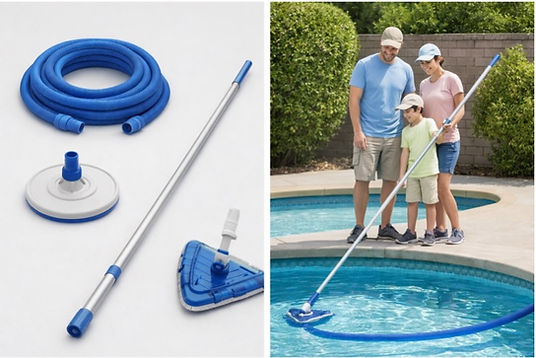
Steps:
-
Ensure the pump and filter are running.
-
Close the main drain valve on the equipment pad.
-
Attach the vacuum head to the telescopic pole.
-
Attach the blue end of the hose to the vacuum head and the white end to the vacuum plate.
-
Submerge the head and hose in the pool, resting the pole on the pool edge.
-
Hold the vacuum plate against a return jet to fill the hose with water and remove air.
Bubbles from the vacuum head mean air is still leaving the hose — once they stop, the hose is primed.
-
Place your thumb over the vacuum plate hole to maintain suction and quickly attach the plate to the skimmer basket.
-
Begin vacuuming slowly across the pool floor.
-
Once finished, open the main drain valve, remove equipment, rinse the hose, and store it to dry.
⚠️ Safety Note:
Do not operate the pump without adequate water flow. Running the pump dry may cause damage not covered under warranty.
How to Guide - Cleaning Cartridge Filters
Frequency: Every 3 months
You’ll Need:
-
Wrench or socket
-
Pressure washer
-
Hose
-
Channel locks

Steps:
-
Turn pool system off.
-
Always release internal filter pressure before opening the housing (orange lever on top). Failure to do so may result in serious injury.
-
Remove the collar bolt and lift off the top of the filter housing.
-
Remove filters and rinse thoroughly — Using an electric pressure washers, staying at least 8” away from the filters with the end of the wand. Avoid using extreme high-pressure washers unless recommended by the filter manufacturer.
-
For deep cleaning, soak filters in filter cleaner at season’s end.
-
Clean the gasket and filter base lip; remove debris or buildup.
-
Reassemble according to manufacturer specifications, ensuring the gasket seats properly and the clamp is evenly tightened.
How to Guide - Sat Cell Cleaning
Frequency: Every 2 months
You’ll Need:
-
Strap wrench or channel locks
-
End cap’s
-
Salt cell stand
-
Funnel
-
Cell cleaner
-
Hose
-
Cardboard (work surface)

Steps:
-
Turn pool system off and unplug the salt cell from the panel.
-
Release pressure from filter.
-
Unscrew unions on either side of the salt cell.
-
Inspect the cell plates for calcium buildup.
-
Rinse with a garden hose.
-
Attach end cap and stand upright.
-
Carefully fill with Cell cleaner using a funnel — do this outdoors or over cardboard.
-
Let it soak for 20 minutes (do not leave longer).
-
Dispose of or store acid in accordance with manufacturer and local safety guidelines.
-
Rinse cell thoroughly with water.
-
Reinstall and reconnect, tightening by hand and then a quarter turn with tools.
⚠️ Safety Note:
Always wear gloves and eye protection when handling acid. Never mix acid with other chemicals. Improper handling of muriatic acid may result in serious injury or damage. Everclear Pools & Spas is not responsible for injury or damage resulting from improper chemical handling or failure to follow manufacturer safety instructions.
How to Guide - Priming the Pump
Frequency: As needed
You’ll Need:
-
Garden hose

Steps:
-
Turn the pump off.
-
Open all return (jet) lines.
-
Open one suction line (close others).
-
Remove the pump lid.
-
Fill the pump with water for about 3-5 minutes.
-
Close the suction line and top off the pump until it’s full.
-
Replace and secure the lid.
-
Reopen the suction line, quickly turn pump on and monitor water flow immediately. If water does not circulate within 30–60 seconds, turn the pump off and reassess..
-
Once water circulates normally, open the air release valve on the filter to let air escape.
-
Repeat process for other suction lines if needed.
⚠️ Safety Note:
If you are unfamiliar with valve configuration or priming procedures, contact a qualified service professional.
Equipment Identification Chart
1. Automation Control Panel (Salt & LED System)

Name: Hayward Omni-PL Logic Controller
Description: This is the “brain” of your pool system. It controls the LED lighting, the salt-water chlorination cell, pump, heater and communicates via Wi-Fi/app for remote operation.
Why it matters: Allows you to monitor salt levels, chlorine production, and lighting modes — keeps everything integrated and simplified.
2. Pool Pump
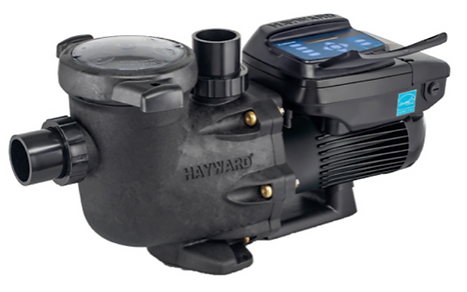
Name: Hayward Variable Speed Pump
Description: This pump circulates water through the pool system: skimmer → filter → heater/chlorinator → returns.
Why it matters: Proper water flow is critical for sanitation, heating, and filtration. If this pump runs incorrectly, the system suffers.
3. Cartridge Filter

Name: Hayward Cartridge Filter
Description: After water is pulled through the pump, it goes through this filter to remove dirt, debris and contaminants before returning to the pool.
Why it matters: Clean filtration helps keep water clear and reduces load on other equipment. Regular maintenance of the filter prolongs system life.
4. Salt-Water System & Cell

Name: Hayward Salt Cell
Description: Converts dissolved salt in the water into chlorine, sanitizing the pool without traditional chlorine additions.
Why it matters: Provides consistent chlorine generation and reduces need for manual chemical addition — must maintain salt levels for proper operation.
5. Zinc Anti-Electrolysis Anode & Current Collectors
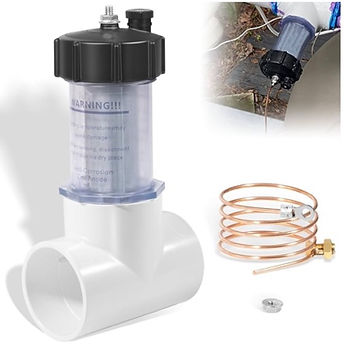
Name: Zinc Anti-Electrolysis Anode
Description: These components protect metal hardware (ladder rails, light niches, etc) from corrosion caused by the salt-system by diverting stray electrical currents safely to ground.
Why it matters: Helps preserve your stainless-steel components and lighting fixtures by preventing galvanic corrosion – especially important in salt-water environments.
6. Pool Heater

Name: Hayward Natural Gas Heater (with electric controls)
Description: Heats pool water to comfortable temperature using natural gas; integrated with the automation system.
Why it matters: Enables comfortable swimming in cooler weather. Annual professional servicing is recommended to ensure safe operation and efficient heating.
7. Skimmer & Main Drains

Name: Hayward Wide-Mouth Skimmer
Description: The skimmer removes floating debris and helps circulate water; the main drains pull water from the floor for circulation and return fittings send clean water back..
Why it matters: Proper circulation ensures even water temperature and effective filtration. Skimmer must be kept clear of leaves and debris for optimal performance.
8. Pool Lightning

Name: Hayward ColorLogic Pool Lights (5-colour LED)
Description: Underwater LED lighting system that changes colour for ambiance and safety at night. Includes transformer and deck boxes for installation.
Why it matters: Adds aesthetic value and improves night-time safety. Proper operation and low voltage wiring are important for longevity.
9. Solar Blanket & Roller

Name: Blue Solar Blanket + Metal Rocky-Guard Roller (with deck wheels)
Description: Solar blanket helps retain heat and reduce evaporation. Roller system makes deployment/removal easy.
Why it matters: Helps maintain water temperature, reduce chemical use, and enhance safety when pool is not in active use.
10. Pool Winter Cover

Name: Performance Safety Cover (5 × 5 grid, trampoline style) with heavy-duty hardware
Description: A high-strength, trampoline-style safety cover secured with heavy-duty springs and anchors. Designed to stretch tightly across the pool, it provides a durable, tensioned barrier that blocks debris, supports significant weight, and allows water to drain through while protecting the pool during the off-season.
Why it matters: It keeps the pool secure, prevents accidental entry, reduces maintenance, and withstands harsh weather—offering long-lasting protection with minimal upkeep.
11. Jet Returns

Name: Hayward Return Eyeball
Description: Jet returns are the small directional inlets located around the pool walls that push filtered, treated water back into the pool. Each jet can typically be adjusted to control the direction and flow, helping move water efficiently throughout the pool.
Why it matters: They improve circulation, help mix chemicals, move debris towards the skimmer, and reduce dead spots that lead to algae
12. Ladder Anchors

Name: Brass Ladder Anchors
Description: Solid brass sleeves installed in the pool deck that the ladder rails slide into, locking the ladder firmly and securely in position.
Why it matters: They provide a stable, corrosion-resistant mounting point that keeps the ladder safe to use, prevents movement over time, and ensures long-lasting structural support.
13. Deck Box
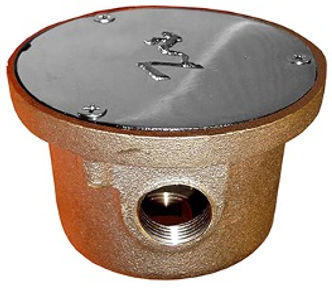
Name: Junction Box (Pool Light Junction Box)
Description: A weather-rated electrical box mounted in or near the pool deck that houses and protects the wiring connections for pool lights and other low-voltage equipment.
Why it matters: It keeps electrical splices safe, dry, and compliant with code, ensuring reliable operation of pool lighting and allowing easy access for troubleshooting or maintenance.
14. Transformer
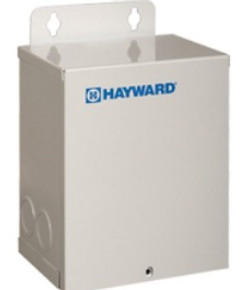
Name: Hayward Wall-Mount Transformer
Description: A dedicated Hayward electrical transformer mounted on a nearby wall that safely converts household voltage to the lower voltage required for pool lights and certain Hayward equipment.
Why it matters: It ensures your pool lighting operates safely, prevents electrical overload, and provides reliable, code-compliant power to low-voltage systems.
15. Inline Chlorinator
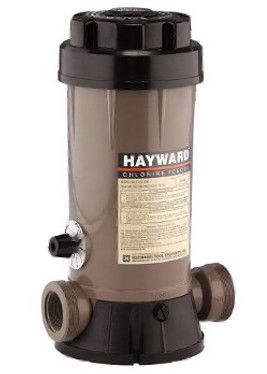
Name: Hayward Inline Automatic Chlorinator Puck Feeder
Description: A Hayward device installed directly in the return line that slowly dissolves chlorine tablets and feeds measured sanitizer into the pool water as it circulates.
Why it matters: It provides consistent, controlled chlorine levels with minimal effort, helping to keep the pool clean, clear, and properly sanitized.
16. Main Drains
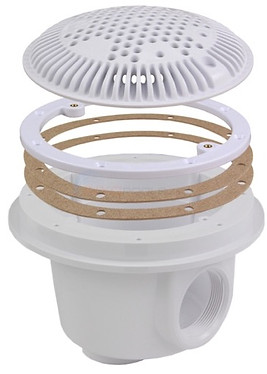
Name: Hayward Dual-Suction Outlet
Description: The suction outlets located at the deepest point of the pool, designed to pull water down into the filtration system and improve overall circulation.
Why it matters: They help circulate deep water, prevent stagnant areas, and support efficient filtration—while modern safety covers reduce entrapment risks and keep the pool compliant. Do not remove or modify drain covers. Replacement must be performed with compliant, manufacturer-approved components.
17. Automatic Cover

Name: Coverstar Automatic Pool Cover
Description: A motorized, track-driven safety cover that slides across the pool at the push of a button, sealing the surface with a durable, weather-resistant fabric.
Why it matters: It provides top-tier safety, reduces evaporation and heat loss, keeps debris out, and helps maintain cleaner, more efficient pool operation year-round. Automatic covers are a safety enhancement but are not a substitute for supervision or required safety fencing where applicable
18. Telescopic Handle
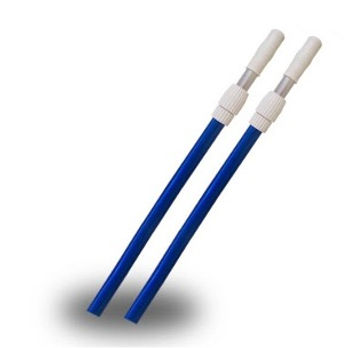
Name: Hayward Telescopic Pole
Description: An adjustable, lightweight pole used with pool tools such as nets, brushes, and vacuum heads to reach and clean all areas of the pool.
Why it matters: It gives homeowners the reach and control needed for routine cleaning, helping keep the pool clear of debris and well-maintained with minimal effort.
19. Skimmer/Leaf Net

Name: Hayward Net Attachment (Leaf Net/Skimmer Net)
Description: A lightweight mesh attachment that connects to the telescopic pole, used to scoop leaves, bugs, and surface debris from the pool.
Why it matters: It helps keep the pool clean between services, prevents debris from sinking, and makes quick daily maintenance easy for any homeowner.
20. Vacuum Head/Hose
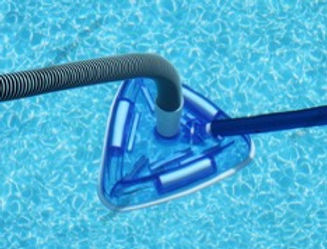
Name: Hayward Triangular Vacuum Head/ Vacuum Hose
Description: A triangular vacuum head designed for efficient manual cleaning, connected to a durable, spiral-wound Hayward vacuum hose that provides strong suction and flexibility while removing dirt from the pool floor.
Why it matters: This system allows for thorough debris removal in corners and along edges, improves overall water clarity, and helps homeowners maintain a cleaner, healthier pool between service visits.
Important Operating & Safety Notice
This handbook is provided as a general informational guide to assist you in operating and maintaining your pool.
Pool performance and maintenance needs may vary depending on environmental conditions, water source, usage, weather, and surrounding landscape.
Homeowners are responsible for:
-
Routine water testing and chemical balancing
-
Safe chemical storage and handling
-
Monitoring equipment operation
-
Maintaining proper water levels
-
Ensuring safe use of the pool by all users
Everclear Pools & Spas is not responsible for damage, injury, or equipment failure resulting from improper maintenance, misuse, unauthorized modifications, environmental conditions, or failure to follow manufacturer instructions.
Always refer to the individual manufacturer manuals for specific equipment requirements. If you are uncertain about any procedure, contact a qualified pool professional.
Failure to maintain proper water chemistry and equipment operation may result in damage not covered under manufacturer or workmanship warranties.